

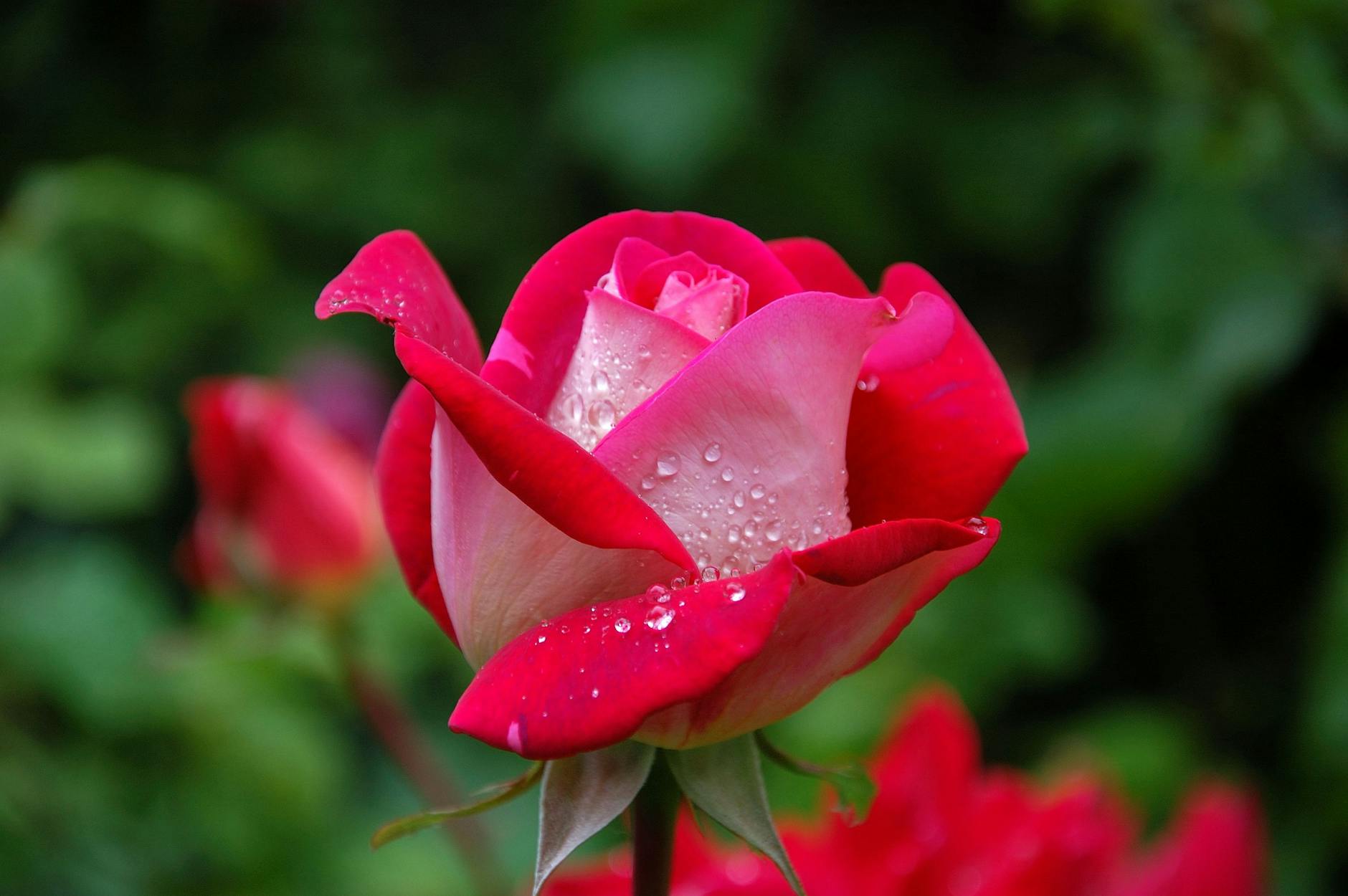
It is now the season of Advent – a time of renewal, and a time of great blessings. In Great Lent in we are taught to discard our attachments to the world in order to embrace our eternal life. But in Advent, we are brought the hope of our coming salvation through the incarnation of God becoming man.
It is through reflection that we come to realize just how gently God works in our lives to lift each finger we have griped so tightly to those things we think we must cling to. We are always afraid to let go. We don’t trust enough to find out what is on the other side.
To paraphrase what Ant Middleton said in his book, “The Fear Bubble”, concerning making choices in life. We constantly listen that that inner voice that tells us to “be careful, don’t take the risk”. But life is a corridor filled with doors to open. We hesitate preferring to remain in a toxic world of the familiar, and leaving behind many opportunities that would give us the chance to become a better person.
My deaths from three papercuts…
As I reflected on the past year, I realized that, beginning with Great Lent, there were several pivotal moments in my life which made quite clear those things to which I was attached. And until the separation of them was complete, I would continue to be chained to them.
1. Familial ties:
Little did I understand that my fear of letting go from a long-time relationship had kept me from an unprecedented time of growth. Like the grapevine that must be pruned in order to produce fruit the following year, so must my personal relationships must be pruned in order to gain new fruit – new relationships. I had stagnated in the land of the familiar little realizing that my fear was preventing me from learning that I did not need to lean on others, but on my trust and faith in God alone.
[P]ersonal relationships must be pruned in order to gain new fruit…
Once that separation took place and the waves of grief that washed over me had long passed that I realized what an opportunity it was to grow in so many dormant areas of my life. The soil was now richly fertilized with experience, and I had no need to be shackled to a life of misery.
2. Religious affiliation:
Baptized, born and raised in one of the two ancient religions of the Christian faith, I was taught that leaving would mean death for eternity. Yet I had left once for something far worse in my past journey – something that nearly destroyed my soul, experiencing great trials. Yet through the doors of loving relationships and a time for rest, I was ready to return and try again. I thought that peace and stability was at my doorstep once more.
But that was not to be. Over the course of the next many decades, I saw the instability and self-destructiveness of what had become a shadow of what I had known in my childhood. So much had been jettisoned in favor of embracing all the other faiths that there was little left of the stability I had once grown up with. Since Vatican II the form of worship went from magnificent beauty and antiquity to modernist mediocrity. What had been passed on for centuries was no more.
Statements from the leader of the Church were confusing, and [the defenders only added to the confusion…]
In seeking the old rite I found that it, too, had been embellished and reformed. Agreements made to compromise against the very agreements that had originally founded the Orders made the path to the future uncertain. Statements from the leader of the Church were confusing, and the talking heads would try to defend the assertions of the supreme pontiff by twisting the words and filling in the blanks with “meanings” that were quite obviously not intended as they asserted.
It was time to discover if there was anything left – a remnant of that ancient Christianity anywhere in the world. So I opened the door to something very different than what I had known. It was familiar in the sense that it held very similar composition of beliefs and practices to my childhood faith, but it was altogether different in structure and operations. It was stepping into a world of tremendous uncertainty.
As I tested the ground upon which this church stood, hammered against it, and left my fears aside, I immersed myself to this new-found religion. It stood sound, solid, unchangeable. And as an added bonus, I was surrounded by people who actually understood my dilemna.
The death of the old was replaced by life in the new. My spirit was reborn into a new world of peace.
3. Technology:
Minimalism. It’s been a long journey to let go of the familiar in technology and material life. From a young age, I explored programming and mainframes, captivated by this emerging industry.
But after over a decade, I saw its direction turning disturbing. The uniqueness of individuals was eroding into mediocrity, everyone conforming to a bland sameness. Personal distinction was vanishing.
Today, a once-incredible tool has become a threat, able to imitate human voice and thought, deceiving those who believe what they see and hear is reality. Humanity’s uniqueness is being eroded, and many willingly accept it.
Meanwhile, a different movement emerged—one seeking a return to our roots, a simpler, more authentic way of living. I was already on that path. The “new normal” felt burdensome, stifling creativity and ingenuity, so I rebelled—but not completely.
That changed with the latest iPhone update. Suddenly, I had to choose: continue using a device that relied on invasive interconnectivity or abandon it for something potentially more intrusive but more usable.
iPhone UI changes…
Between the bouncing and jumping buttons and transparencies, I needed to move on to something more stable…


The new UI made the decision easy—disorienting bouncing, zooming, and unreadable screens made me sick. I abandoned the iPhone for a non-Apple device with a much more stable UI. Though privacy concerns persisted, non-Apple workarounds offered some control.
More importantly, this forced me to detach from dependence on the device. Over the years, I’d relied heavily on technology because the old physical books had all been digitized and archived in irretrievable repository. Even libraries were emptied in favor of computerized books. The narratives of newer writings often replaced facts with bias or the most recent cultural norm. I realized that I had stopped using the device for its original purpose: talk, text, and occasionally using a map.
Stripped of my digital crutch, I turned to older, printed materials and began to relearn what I’d forgotten. Minimalism. Simplicity. A renewed life. The excitement I’d lost when tech dependency took over my life—and the life of my company—returned. Stress had drained my desire to let go of that reliance. Now, I’m reclaiming the simple life I once craved.
But the greatest lesson being uncovered was this…
Learning to let go—of the fear holding me back, of the fear of making wrong decisions, and of the hesitation to step through new, unfamiliar doors that lead to freedom from the past.
Our greatest lessons come through struggle and challenge, breaking the chains that keep us from growing into who we’re meant to be. These lessons help us mature into supportive beings, guiding others out of misery and into peace.
Our greatest lessons come through struggle and challenge…
Embracing our hardships is essential; without them, we remain in our cocoon, shrinking and dying, unaware that our choices determine our fate.
By leaving the toxic wasteland of the world behind, we become richer inside—for ourselves and those we touch.
Let’s share this journey, grow together, and illuminate the path beyond closed doors. The only thing to fear is fear itself.