

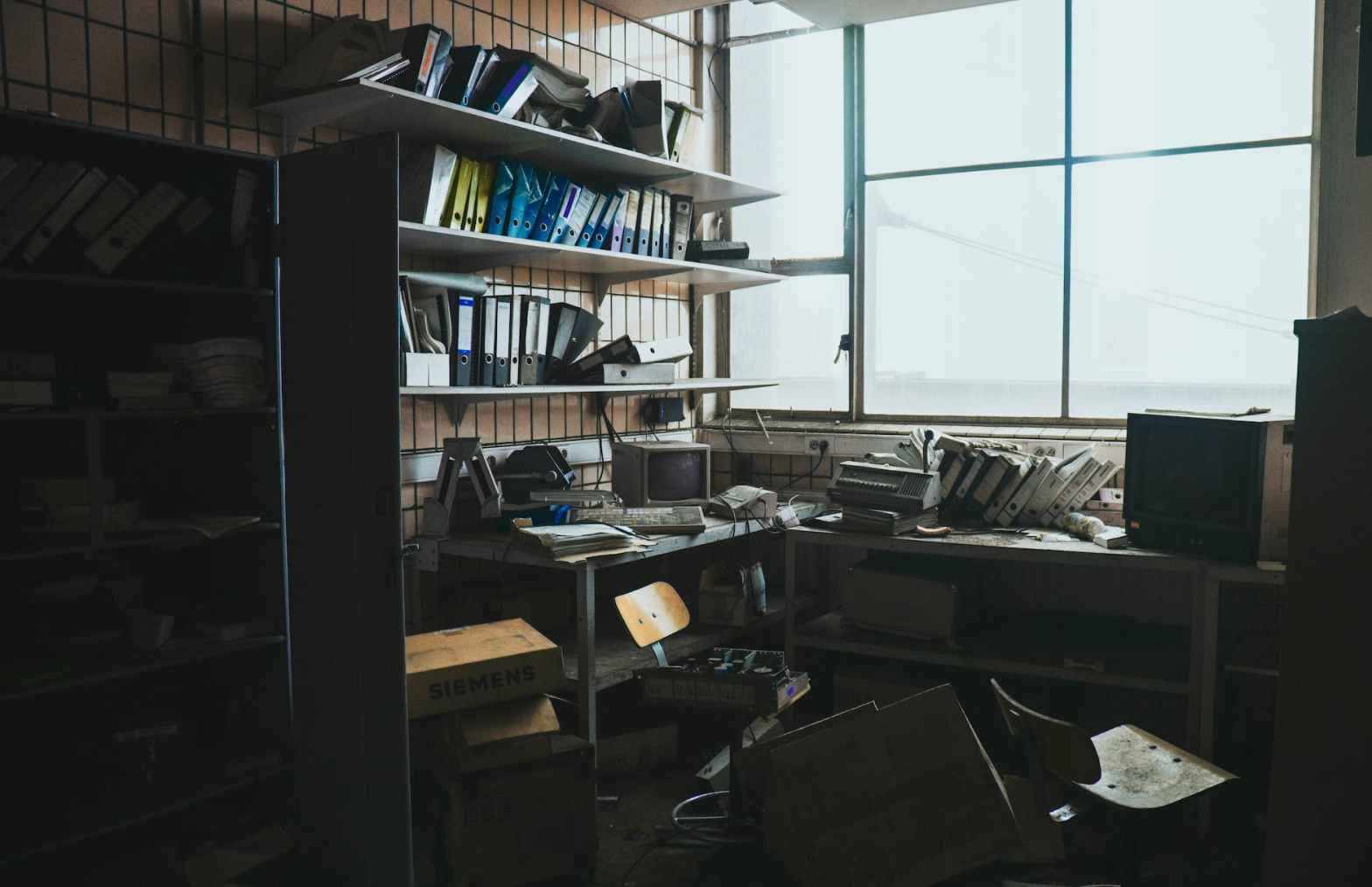
Clutter, clutter everywhere and not a place to move!
This is a story of my personal experience in decluttering. It was the Goldilocks moment of going from too much to just right.
The start of my clutter…
As a young child, I used to keep pretty much anything that came into my hands. So much so that my mother would give my room a look of exasperation and try to make me clean it up.

I got wise to the idea that I could just “hide” it under a sheet…or blanket. So my desk became a shrouded pile of junk.
Then I realized that I was not able to find anything. When friends came over, I had to avoid the wall of unmoved trash and hope they didn’t ask what was under the covers.
So I began to clean. And I became obsessed with organizing. Then realized that organizing was a part of who I was.
Obsessed. Like to the point that if anyone even touched something I had organized and moved it the tiniest bit out of place, I’d get upset.
Why?
Because I learned that if things were put in order, and I could more easily find them and definitely not forget them, life became less stressful.
I hadn’t yet figured out the trick
I didn’t realize that until I grew older, but there it is.
As someone who has stumbled into the world of neurodiversity, this reality became a realization that life without structure is just hard. Stuff gets lost. Things disappear, get forgotten, destroyed, or stolen and I’d never know it.
Or I’d forget to take important paperwork or items to meetings, school, work, or even just to a friend’s house because I hadn’t yet figured out the trick to putting everything in a specific spot so they wouldn’t get overlooked. Or left behind.
Chief clutter removal trick
I learned to put things in homes.
So what’s the secret to successfully keeping clutter at bay now?
I learned to put things in homes. By putting such things as pencils, pens, papers, books, toys, clothing, etc. in their own special space, I cannot buy more unless I get rid of something in that space.
One of the ways to figure out how to tackle the clutter was to break it down into manageable chunks. Using the idea of tackling each chunk into “Life Admin Days” helps. (Click here for few ideas.)
The pantry was a mess.
So I set aside an “Admin Organize the Pantry” day.
If something is out of sight, it is out of mind.
- Everything was taken out.
- Forgotten foods and non food items were set on the kitchen table and grouped together.
- Loose foods, such as rice, nuts, chocolate chips, flours, etc. had to be put into bins that would organize the shelves in a way that would give them easy accessibility and visibility.
I knew that if something is out of sight, it is out of mind. And old chocolate chips are just…disgusting.
So I measured the shelves, ordered bins to contain everything, and figured out what items I needed to access most often.

- Canned goods were grouped together by type, and made easier to rotate so the newest ones wouldn’t be in the front.
- Spices and teas had new containers that were refillable, Bulk purchases for refilling were placed in bins under the shelving where they would be easily accessed but out of the way.
Now, I’m not as tempted to buy something because my space is now confined. I’m also not spending more at the grocery store buying the same items that had disappeared into the depths of the dank, dark pantry shelves.
It’s a win-win!
How about clothes, anyone?
Ah clothes! Yes! The bane of everyone who loves them!
Enter Marie Kondo. Organizing the closet, drawers, and show rack not only limited the amount of clothing that I could buy, it also eliminated the need to buy what wasn’t necessary.
- Socks were sorted by color and by season
- Tops were sorted by color and by season
- Pants were sorted by color and by season
- Clothes in the closet were narrowed down to a few basics by color and by season.
You’ll notice a theme here. We live in a very hot climate during the summer months, but very cold during the winter months. I didn’t need everything mixed together. So I grouped them by season first, then by color within that mix.

Now if I want something new, or change up the wardrobe, something has to go. For every new item, a like item must be given away.
Since I’m a cheapskate, and on a super tight budget, getting rid of clothing just to buy something else doesn’t happen very often. So my clothing budget has been cut back immensely!
Plus, I learned where to shop for inexpensive quality clothing. (Can we say Aldi?)
Paperwork clutter…

If you have a problem with mail piling up on the desk, make it a habit to fo through it when it comes in the mailbox. Throw out the junk mail and unsolicited trash. Then sort the bills from the rest. There probably won’t be much there.
Don’t order magazines that you don’t use or read. They are a waste of money and add to the clutter problem.
Books, anyone?
Ditto with books. If you end up buying a book and it isn’t what you expected, either resell it online, donate it to the library, or give it away.
There is no need to keep something just because you spent money on it. (It’s one reason why I use thriftbooks.com to buy gently used books instead of paying full price. Did I say I was a cheapskate already?)
Using the local library is another way to eliminate clutter.
If you really like the book and know you’ll refer to it in the future, then buy a used copy. Then if you decide to give it away at a later date, the cost of it will not hurt your wallet as much.
By limiting your shelf space as well you also will be limited to what you can buy. If you need to absolutely buy a book, then get rid of one to make room for the new one.
Conclusion…
It’s amazing how much is accumulated in just a few months. And it grows exponentially worse in a few years.
The key to eliminating clutter is being intentional. Finding ways that work for you to separate out what you need from what you happen to have acquired.
The Konmari method of keeping those things that “spark joy” makes sense. Balancing the minimum amount of items that are necessary for comfort and use, but eliminating those things that are only kept for the wrong reasons. Like keeping a present from your old Auntie Mae that you absolutely hate. Even though she lives hundreds of miles away and would never know what happened to it.
Balancing the minimum amount of items that are necessary for comfort and use, but eliminating those things that are only kept for the wrong reasons.
The key to declutter is to first set about organizing what you have. Confine the space that those items take up. Then buy only what will fit in that space.
It’s hard to let things go. But it becomes freeing when you finally embrace the frugal mindset and start reshaping your environment.
You’ll be less likely to fall for the marketing ploys that will lure you into purchasing something you really don’t need.
Plus, you’ll save money in the long run.
And isn’t that what removing the chains of stuff all about?
Share your victories over clutter and let us know what worked for you. It may inspire someone else to follow your advice!